
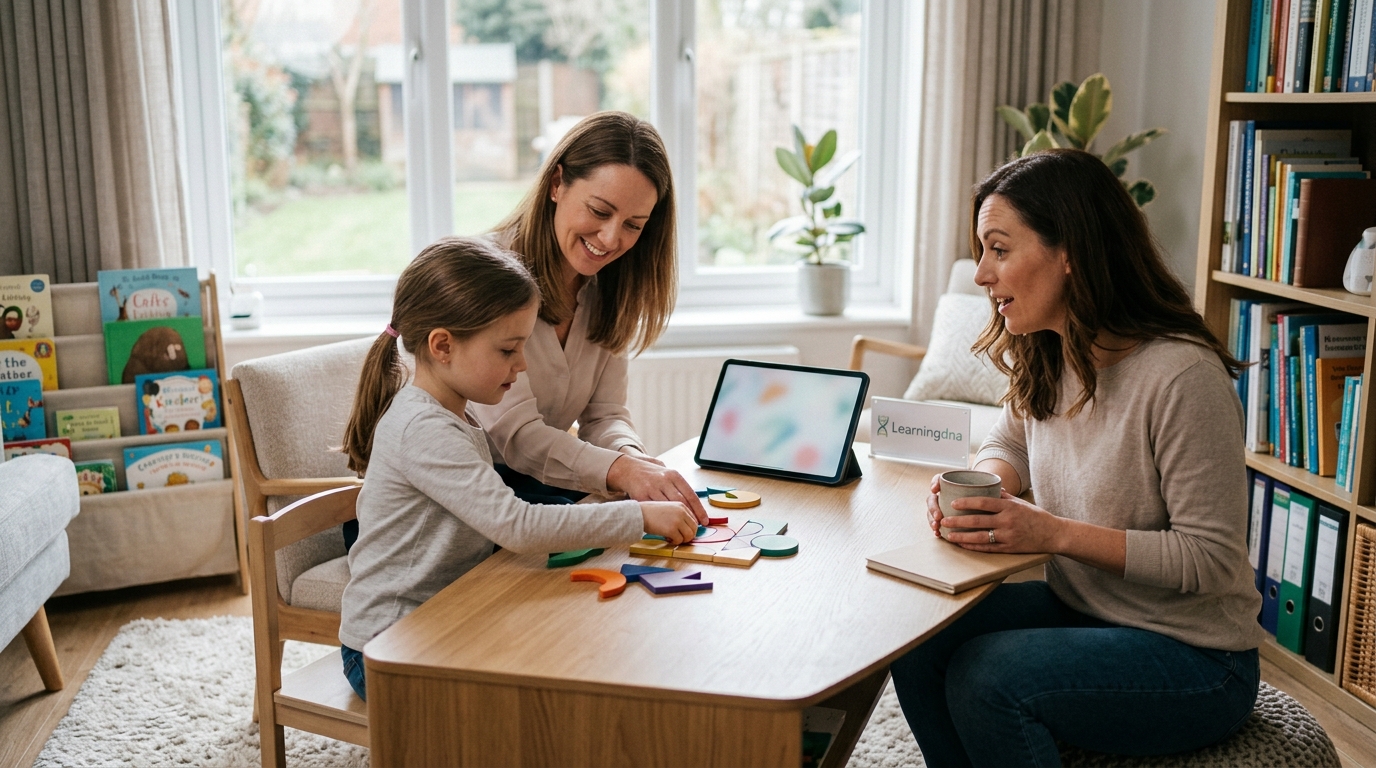
What does a complete neurodiversity assessment actually involve for your child?
A complete neurodiversity assessment is a comprehensive, multi-domain evaluation that examines a child's cognitive, sensory, and behavioral profile to identify specific learning differences. It moves beyond a single label to provide a detailed map of strengths and challenges, enabling targeted support. At Learning DNA, this process is designed to give families a clear, actionable plan rather than just a diagnosis.
The Multi-Domain Approach to Cognitive Profiling
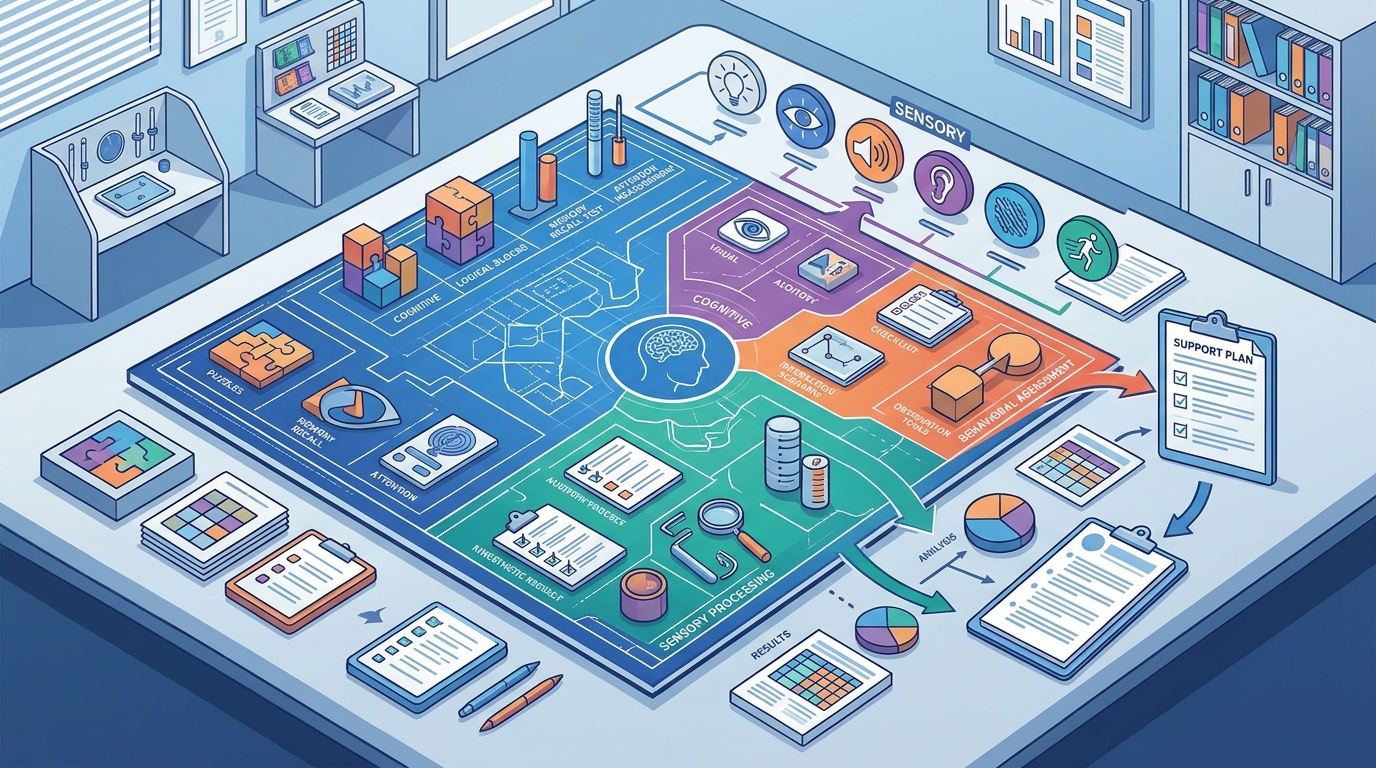
Traditional assessments often focus on a single area, such as reading or attention. A complete neurodiversity assessment, however, looks at the whole child. This holistic view is critical because learning difficulties rarely exist in isolation. For example, a child with dyslexia may also have underlying issues with working memory or visual processing that affect their overall academic performance.
At Learning DNA, our 360-degree assessment covers 14 distinct areas of learning. This breadth ensures that we do not miss co-occurring conditions. By examining these multiple domains simultaneously, we can identify the root causes of a child's struggles. This approach prevents the "tunnel vision" that can occur when a school or GP focuses on one symptom while ignoring the broader context.
The evidence for this multi-domain approach is strong. Research indicates that up to 80% of children with ADHD also have at least one other neurodevelopmental condition. If an assessment only looks at attention, it may miss the sensory or motor difficulties that are actually driving the child's distress. A complete profile allows clinicians to prioritize interventions that address the most significant barriers to learning.
Standardized Diagnostic Criteria and Validated Tools
Reliability is the cornerstone of any professional assessment. A complete neurodiversity assessment relies on standardized diagnostic criteria, such as those found in the Diagnostic and Statistical Manual of Mental Disorders (DSM-5). These criteria provide a consistent framework for identifying conditions like autism, ADHD, and specific learning disabilities. Using validated tools ensures that the results are not based on subjective opinion but on measurable data.
Learning DNA partners with leading assessment providers, including Pearson Education and GL Assessment, to deliver these evaluations. These tools are rigorously tested for accuracy and fairness. For instance, a dyslexia assessment using these validated instruments can distinguish between a true reading difficulty and a simple lack of practice or motivation. This distinction is vital for determining the right type of support.
The implication for parents is clarity. When you receive a report based on standardized tools, you know that the findings are objective. This objectivity is essential when applying for additional support at school or for educational health and care plans (EHCPs). Schools and local authorities are more likely to act on evidence that is derived from recognized, standardized assessments rather than anecdotal observations.
The Role of Clinical Psychology and Specialist Input
Who conducts the assessment matters as much as what is assessed. A complete neurodiversity assessment should be led by qualified professionals who understand the nuances of neurodevelopmental conditions. At Learning DNA, our team includes HCPC-registered psychologists and Level 7 specialist teachers. This combination of clinical and educational expertise ensures that the assessment is both medically sound and practically relevant to the classroom. according to Neurodiversity Assessments and
For example, a clinical psychologist can identify the emotional and behavioral impacts of a condition, while a specialist teacher can explain how those impacts manifest in a school setting. This dual perspective is crucial for creating a support plan that works in the real world. A diagnosis that does not translate into practical classroom strategies is of limited use to a child who is struggling daily.
The presence of a multidisciplinary team also allows for a more nuanced interpretation of results. If a child scores low on a cognitive test, a specialist can determine whether this is due to a learning disability, anxiety, or a sensory processing issue. This level of detail is often missed in single-specialist assessments. It ensures that the final report provides a comprehensive understanding of the child's needs.
From Assessment to Actionable Support Plans
The goal of an assessment is not just to name a condition, but to provide a roadmap for improvement. A complete neurodiversity assessment concludes with a detailed report that outlines specific recommendations. These recommendations are tailored to the child's unique profile and are designed to be implemented by parents, teachers, and therapists. At Learning DNA, we believe that every child can achieve their potential with the correct assessment and programme of interventions.
For instance, if an assessment identifies retained primitive reflexes, the report may recommend a specific movement therapy programme. If it identifies auditory processing difficulties, it may suggest auditory integration training. These are not generic suggestions; they are targeted interventions based on the specific findings of the assessment. This direct link between assessment and intervention is what makes the process "complete."
The implication for families is a reduction in uncertainty. Instead of being left to guess what might help, you receive a clear plan of action. This plan can be shared with the school to ensure that the support provided is consistent and evidence-based. It also helps parents to advocate for their child more effectively, as they can point to specific, professional recommendations rather than general concerns.
The Importance of Ongoing Monitoring and Review
Neurodevelopment is a dynamic process, and a child's needs can change over time. A complete neurodiversity assessment is not a one-off event; it is the start of an ongoing journey. Regular reviews and monitoring are essential to ensure that the support plan remains effective. At Learning DNA, we use tools like TrackAble to help schools and families track progress over time. This continuous monitoring allows for adjustments to be made as the child develops.
For example, a child who initially struggles with handwriting may make significant progress with occupational therapy. However, as they move to secondary school, their challenges may shift to organization and time management. A static assessment would not capture this shift. Ongoing monitoring ensures that the support evolves with the child, preventing new gaps from forming.
The implication is long-term success. By treating the assessment as a starting point rather than an endpoint, families and schools can ensure that the child receives the right support at the right time. This proactive approach helps to build resilience and confidence, which are critical for academic and personal success in the long term.
Key Takeaways
- A complete neurodiversity assessment is a multi-domain evaluation that examines cognitive, sensory, and behavioral profiles.
- It uses standardized diagnostic criteria and validated tools to ensure reliability and objectivity.
- The assessment should be led by a multidisciplinary team, including clinical psychologists and specialist teachers.
- The final report provides a detailed, actionable support plan tailored to the child's specific needs.
- Ongoing monitoring and review are essential to ensure that the support plan remains effective as the child develops.
- At Learning DNA, our 360-degree assessment covers 14 areas of learning to provide a comprehensive view.
Frequently Asked Questions
How long does a complete neurodiversity assessment take?
The initial 360-degree assessment at Learning DNA takes approximately 90 minutes. However, the full process, including feedback and report writing, may take a few weeks. Diagnostic assessments for specific conditions like ADHD or autism may take longer, depending on the complexity of the case.
Do I need a referral from my GP or school?
No, you do not need a referral from your GP or school to book an assessment with Learning DNA. You can book a free consultation directly with our team to discuss your concerns and determine the next steps.
Can the assessment be done online?
Yes, Learning DNA offers fully remote assessments. This means that you and your child can participate from the comfort of your home. Our clinical team is experienced in conducting high-quality assessments via video call.
What happens after the assessment?
After the assessment, you will receive a detailed report outlining the findings and recommendations. We will also schedule a feedback session to discuss the results with you and your child. If you choose, we can then begin a tailored programme of support.
Is the assessment suitable for all ages?
Our assessments are designed for children and young people. The specific tools and approaches used may vary depending on the age of the child. We work with children from primary school age through to secondary school and beyond.
How much does a complete neurodiversity assessment cost?
Costs vary depending on the specific services required. For schools, we offer a credit-based system where one credit is £100 of specialist time. For families, we offer affordable payment plans. You can for a detailed quote based on your specific needs.
Start Your Child's Journey with Learning DNA
Understanding your child's unique learning profile is the first step toward unlocking their potential. A complete neurodiversity assessment provides the clarity and confidence you need to advocate for the right support. At Learning DNA, we are committed to helping families and schools navigate this process with expertise and care. To begin, you can book a free consultation with our team today.