

Choosing a private neurodiversity clinic in Solihull requires balancing clinical expertise with financial feasibility. Learning DNA offers a transparent, credit-based model that allows families and schools to plan budgets effectively, while other local providers may use fixed fee structures. This guide compares the cost implications of different assessment pathways to help you make an informed decision.
Understanding the Cost Structure of Private Assessments
Private neurodiversity assessments in the UK vary significantly in price depending on the type of condition being assessed and the qualifications of the clinician. A standard dyslexia assessment typically costs less than a full autism diagnostic assessment, which requires a multidisciplinary team. Understanding these tiers is the first step in budgeting for support.
The Credit-Based Model
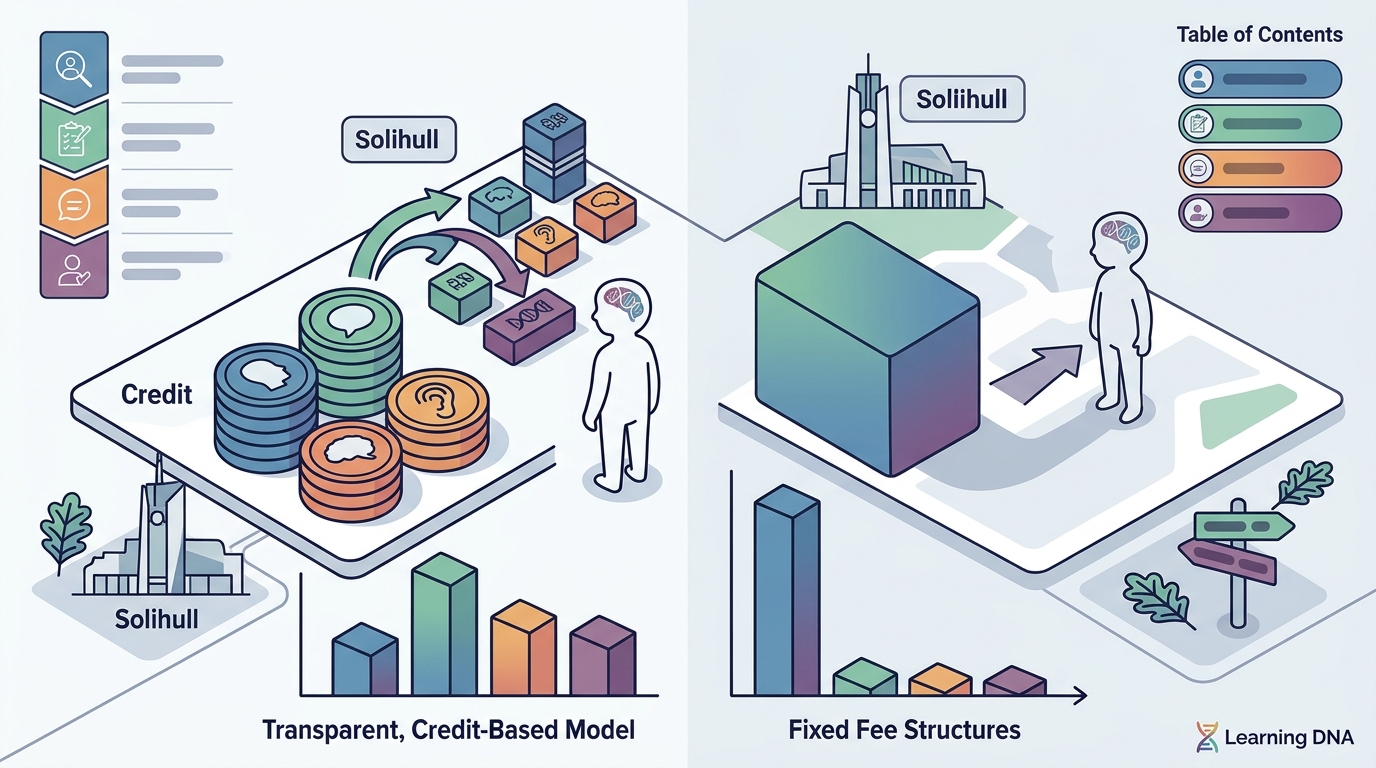
Some clinics, such as Learning DNA's Digital SEND Clinic, use a credit system to simplify pricing. In this model, one credit represents a fixed amount of specialist time. This approach allows schools and families to purchase a yearly agreement and draw down services as needed, providing flexibility for complex cases that may require multiple interventions.
Fixed Fee vs. Package Pricing
Many traditional private clinics operate on a fixed fee basis for each assessment type. While this can be straightforward for a single diagnosis, it may become costly if a child requires follow-up therapy or additional assessments. A package or credit model often provides better value for families who need ongoing support rather than a one-off report.
Learning DNA: Transparent Credit Pricing
Learning DNA is a multidisciplinary neurodiversity clinic based in Solihull that offers both in-person and remote services. Their pricing structure is designed to be predictable and accessible, particularly for schools and multi-child families.
Strengths of the Learning DNA Model
The primary strength of Learning DNA is its transparency. They publish their credit menu, where one credit is defined as £100 of specialist time. For example, a 360-degree assessment, which covers 14 areas of learning, costs 3 credits. This allows parents to know the exact cost before starting. Additionally, they offer payment plans through partners like GoCardless, spreading the cost over 6 to 12 months.
Limits and Considerations
The credit system requires an upfront commitment to a yearly agreement. While this offers flexibility, it may not suit families who only need a single, one-off assessment and do not wish to commit to a longer-term plan. However, the ability to add services like therapy or exam access arrangements to the same agreement often offsets the initial commitment.
Traditional Private Clinics in Solihull
Other private providers in the Solihull area often operate with a more traditional fee-for-service model. These clinics may charge a flat rate for a specific diagnostic assessment, such as ADHD or Autism.
Strengths of Fixed Fee Clinics
Fixed fee clinics are often easier to understand for a single transaction. If you know exactly what you need, such as a dyslexia assessment, the price is clear. These clinics may also have shorter waiting lists for specific, single-condition assessments compared to comprehensive multidisciplinary clinics.
Limits and Considerations
The main limitation is the lack of integration. If a child is diagnosed with one condition but also needs speech and language therapy or movement therapy, you may need to engage with separate providers. This can lead to fragmented care and higher overall costs. Additionally, fixed fees do not typically include ongoing monitoring or progress tracking, which are essential for long-term support.
Cost Comparison Table
| Criteria | Learning DNA (Credit Model) | Traditional Private Clinic (Fixed Fee) |
|---|---|---|
| Pricing Structure | Yearly credit agreement (e.g., 10, 25, or 50 credits) | Per-assessment fixed fee |
| Payment Flexibility | 6-12 month payment plans available | Usually one-off payment or limited installments |
| Ongoing Therapy Integration | Included in credit menu (e.g., 7 credits for talking therapy) | Separate contracts and fees required |
Choosing the Right Clinic for Your Needs
Selecting the right provider depends on your child's specific needs and your financial situation. The following guidance helps you decide which model is best for you.
Choose Learning DNA If...
- You need a comprehensive, multidisciplinary approach that covers multiple areas of learning.
- You want to bundle assessments with ongoing therapy and support programs.
- You are a school or SENCo looking for a single partner for tracking, assessment, and exam access.
- You prefer the flexibility of a credit system that allows you to add services as needs evolve.
- You require a payment plan to spread the cost over several months.
Choose a Traditional Fixed Fee Clinic If...
- You are certain your child only needs a single, specific diagnosis (e.g., dyslexia only).
- You do not anticipate needing ongoing therapy or additional assessments.
- You prefer a one-off transaction without a yearly commitment.
- You are located in an area where remote services are not a viable option and prefer a specific local clinic.
Frequently Asked Questions
Can I switch clinics if I am unhappy with the initial assessment?
Yes, you can switch clinics, but you will likely need to pay for a new assessment. It is important to ensure the first clinic provides a detailed report that can be shared with the new provider to avoid duplicating work. Learning DNA's 360-degree assessment is designed to be comprehensive, reducing the need for re-assessment.
Do private assessment costs include therapy?
Is there a difference in cost between remote and in-person assessments?
Generally, no. Most private clinics, including Learning DNA, charge the same for remote and in-person sessions. The cost is based on the clinician's time and expertise, not the delivery method. Remote assessments can save you travel time and costs, making them a practical option for families outside Solihull.
Can schools use private assessment costs for EHCP applications?
Private assessments can provide evidence for an Education, Health and Care Plan (EHCP) application. However, local authorities are not required to accept private reports. It is advisable to discuss this with your SENCo before purchasing a private assessment to ensure it meets local authority requirements.
What happens if I run out of credits before the year ends?
Credits typically last for the agreement year. If you run out, you can purchase additional credits or wait for the next renewal. Learning DNA allows schools to add credits to their renewal, ensuring continuity of care for pupils who need ongoing support.
Are there any hidden costs in private neurodiversity assessments?
Reputable clinics should have no hidden costs. However, be aware of additional fees for report amendments, extra sessions, or travel if in-person. Learning DNA's transparent credit menu helps avoid these surprises by clearly defining the cost of each service.
Conclusion
When comparing neurodiversity assessment costs in Solihull, it is essential to look beyond the initial price tag. Consider the long-term value of a multidisciplinary approach that integrates assessment, therapy, and tracking. Learning DNA offers a transparent, flexible model that supports families and schools in unlocking the full potential of every child. To discuss your specific needs and budget, book a free consultation with our team today.