

Where to Get Your Child Assessed for Autism, ADHD, or Dyslexia in Birmingham
Parents in Birmingham can access specialist assessments for autism, ADHD, and dyslexia through private neurodiversity clinics, local authority educational psychology services, and school-based support. Learning DNA provides a multidisciplinary approach, offering remote and in-person assessments in Solihull to help families navigate these complex pathways efficiently.
This guide covers the primary routes for obtaining a diagnosis, the specific role of school SENCos, and the distinct requirements for dyslexia assessments. We will explore how to choose the right provider, what to expect during the process, and how to prepare your child for a successful outcome.
Private Assessment Clinics
Private clinics offer the fastest route to a diagnosis, often bypassing the lengthy waiting lists associated with public services. A private assessment is a comprehensive evaluation conducted by a qualified professional to identify specific learning differences or neurodevelopmental conditions. In the Birmingham and Solihull area, families can access specialist services that provide a holistic view of a child's cognitive profile.
Why Choose a Private Provider?
Speed and flexibility are the primary advantages of private assessment. While public sector waiting times can extend to several months, private clinics like Learning DNA can often schedule assessments within weeks. This rapid turnaround allows for earlier intervention, which is critical for a child's academic and social development. Furthermore, private providers typically offer a wider range of therapeutic options immediately following the diagnosis.
What to Expect from a 360-Degree Assessment
Modern private clinics often utilize a 360-degree assessment model. This approach is a multi-faceted evaluation that examines a child's strengths and areas for development across various domains, including cognitive, sensory, and motor skills. At Learning DNA, this process is led by clinical psychologists and Level 7 specialist teachers, ensuring that the assessment is both clinically rigorous and educationally relevant. The resulting report provides a clear action plan, helping parents and schools understand exactly what support the child needs.
Cost and Accessibility
Private assessments are an investment in your child's future. While costs vary by provider, many clinics offer flexible payment plans to make specialist support accessible. It is important to verify that the clinic is accredited and that the assessors hold the necessary qualifications, such as HCPC registration for psychologists or specific dyslexia assessor levels. Learning DNA works with a team of fully qualified professionals who adhere to the highest standards of practice and ethics.
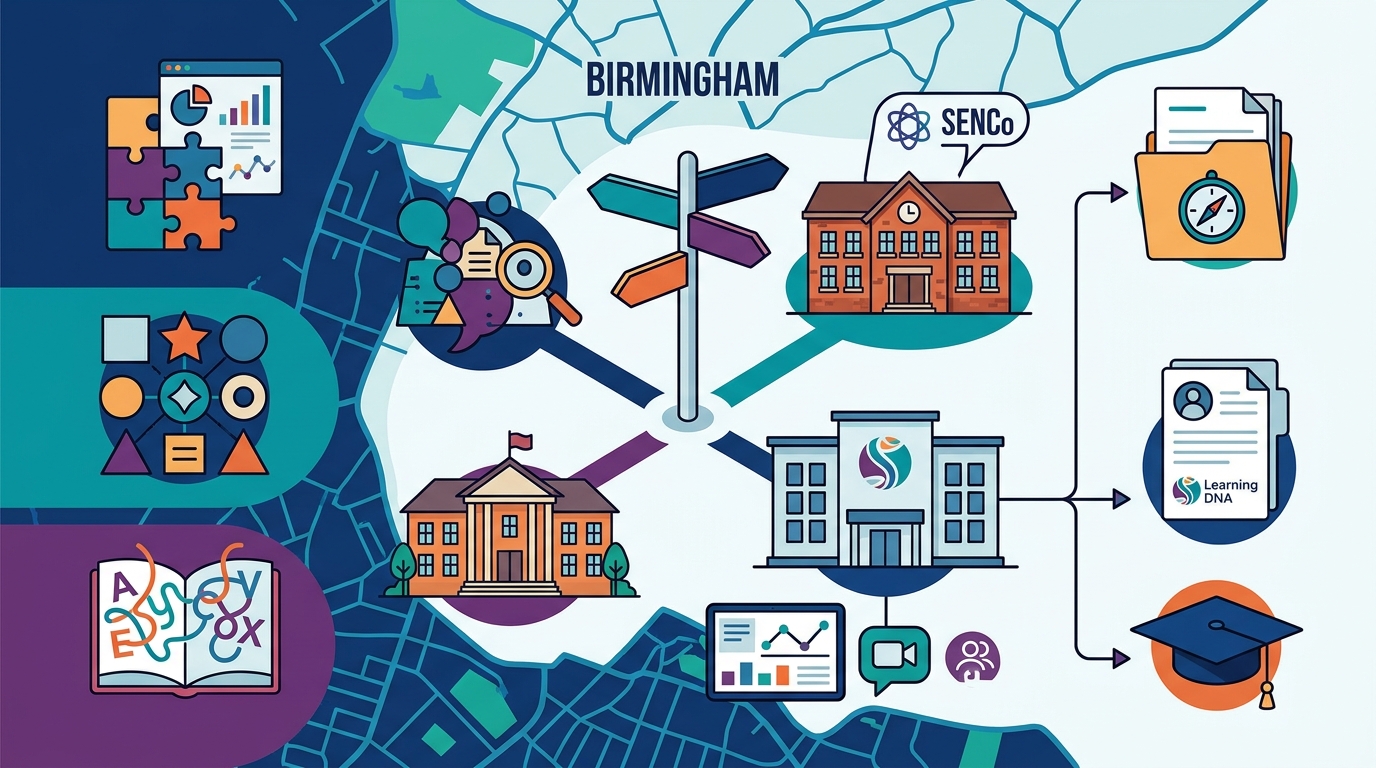
The Role of the School SENCo
The Special Educational Needs Coordinator (SENCo) is the first point of contact for many families. A SENCo is a designated staff member within a school who is responsible for coordinating the provision for pupils with special educational needs. They act as a bridge between the school, the family, and external agencies.
Initial Support and Referrals
Schools are required to identify and support children with special educational needs. The SENCo will typically begin with internal support strategies, such as small group interventions or classroom adjustments. If these measures are insufficient, the SENCo may refer the child for an external assessment. This referral process is crucial for accessing local authority support, which can include educational psychology assessments or statements of special educational needs (EHCPs).
Collaboration with External Providers
Effective support requires collaboration between the school and external clinics. When a private assessment is completed, the SENCo plays a vital role in implementing the recommendations. They ensure that the school's provision aligns with the specialist advice. Learning DNA works directly with SENCos to provide whole-school SEND support, ensuring that the data from assessments is translated into actionable classroom strategies.
When to Seek External Help
Parents should consider seeking external assessment if their child is not making progress despite school support, if there are significant behavioral or emotional concerns, or if the school is unable to provide a clear diagnosis. It is important to maintain open communication with the SENCo throughout this process. Sharing reports and updates ensures that everyone is working towards the same goals.
Dyslexia Assessment Routes
Dyslexia is a specific learning difficulty that primarily affects the development of reading and spelling skills. It is a lifelong condition that requires specific, evidence-based interventions. Unlike ADHD or autism, dyslexia assessments are often conducted by specialist teachers or educational psychologists rather than medical doctors.
Specialist Teacher Assessments
In the UK, dyslexia assessments are typically carried out by teachers who have completed specific training and accreditation. These assessors are often designated as Level 5 or Level 7 dyslexia assessors. A Level 7 assessment is a comprehensive evaluation that includes a full cognitive profile, making it suitable for complex cases or for use in exam access arrangements. Learning DNA employs L5-7 Dyslexia Assessors who can provide detailed reports that meet the requirements of major exam boards.
Visual and Auditory Processing
Recent research highlights the link between visual difficulties and dyslexia. While dyslexia is often described as a language processing disorder, many individuals also experience issues with how they process visual information. These visual difficulties can make letters appear blurry or jumbled, adding to the challenges of reading. A thorough assessment should consider these visual and auditory processing skills to provide a complete picture of the child's learning profile. according to Cognitive psychology
Exam Access Arrangements
A formal dyslexia assessment is often required to qualify for exam access arrangements, such as extra time or the use of a scribe. Exam boards have specific criteria for these accommodations, and a report from a qualified assessor is essential. Learning DNA offers services specifically designed to help students secure the access arrangements they need, ensuring that their exam results reflect their true ability.
Comparison of Assessment Pathways
Choosing the right assessment route depends on your child's specific needs, your budget, and your timeline. The following table compares the three main pathways available in Birmingham.
| Pathway | Typical Wait Time | Cost | Best For | Key Provider |
|---|---|---|---|---|
| Private Clinic | 2-6 weeks | High (Private fee) | Fast diagnosis, comprehensive report, immediate therapy | Learning DNA |
| School SENCo / Local Authority | 3-12 months | Free (Public funded) | EHCP applications, school-based support | Local School / Council |
| NHS / IAPT | 6-18 months | Free (Public funded) | Medical diagnosis of ADHD/Autism, medication management | NHS Trust |
It is important to note that these pathways are not mutually exclusive. Many families use a private assessment to gain a quick understanding of their child's needs, while simultaneously pursuing an EHCP through the local authority. This dual approach ensures that the child receives immediate support while also securing long-term public funding.
Key Takeaways
- Private clinics offer speed: Private providers like Learning DNA can provide assessments in weeks, compared to months for public services.
- SENCo is the first step: Always engage with your child's school SENCo to ensure that school-based support is in place.
- Dyslexia requires specialist teachers: Look for Level 5 or Level 7 accredited assessors for dyslexia, as medical doctors do not typically diagnose this condition.
- 360-degree assessments are holistic: Modern assessments look at cognitive, sensory, and motor skills to provide a complete picture.
- Exam access needs formal reports: A qualified assessor's report is required for exam boards to grant access arrangements.
- Collaboration is key: Share assessment reports with your school to ensure that the recommendations are implemented in the classroom.
- Payment plans are available: Many private clinics offer flexible payment options to make specialist support accessible.
Frequently Asked Questions
How long does it take to get an autism assessment in Birmingham?
Public sector waiting times for autism assessments in Birmingham can range from 6 to 18 months. Private clinics can often provide an assessment within 2 to 6 weeks, depending on availability.
Can I get an ADHD diagnosis from a school?
Schools cannot diagnose ADHD. However, the SENCo can refer your child to an educational psychologist or a private clinic for a formal assessment. Schools can provide support based on observed behaviors, but a medical diagnosis requires a qualified professional.
What is the difference between a Level 5 and Level 7 dyslexia assessment?
A Level 5 assessment focuses on reading and spelling skills, while a Level 7 assessment includes a full cognitive profile. Level 7 reports are generally required for complex cases or for securing exam access arrangements with major exam boards.
Is a private assessment recognized by exam boards?
Yes, provided the assessment is conducted by a qualified assessor (such as a Level 7 dyslexia assessor or an HCPC-registered psychologist) and the report meets the specific criteria of the exam board. Always check the exam board's requirements before booking.
Can I do the assessment online?
Yes, many private clinics, including Learning DNA, offer fully remote assessments. Online assessments can be just as effective as in-person sessions and offer greater flexibility for families who live far from the clinic.
How much does a private assessment cost?
Costs vary by provider and the complexity of the assessment. Many clinics offer payment plans to spread the cost over several months. It is advisable to request a quote from the clinic before booking.
What should I bring to the assessment?
Bring any previous reports, school work samples, and a list of your concerns. It is also helpful to have a parent or carer present who can provide insight into the child's behavior at home.