

NHS Speech and Language Therapy Referral in Solihull: A Step-by-Step Guide
Getting your child referred for speech and language therapy through the NHS in Solihull starts with a conversation with your GP or a school SENCO. You do not need a formal diagnosis to begin this process. If you are concerned about your child's communication, you can request a referral directly. This guide explains the pathway, what to expect, and how to advocate for your child effectively.
Understanding the Referral Pathway
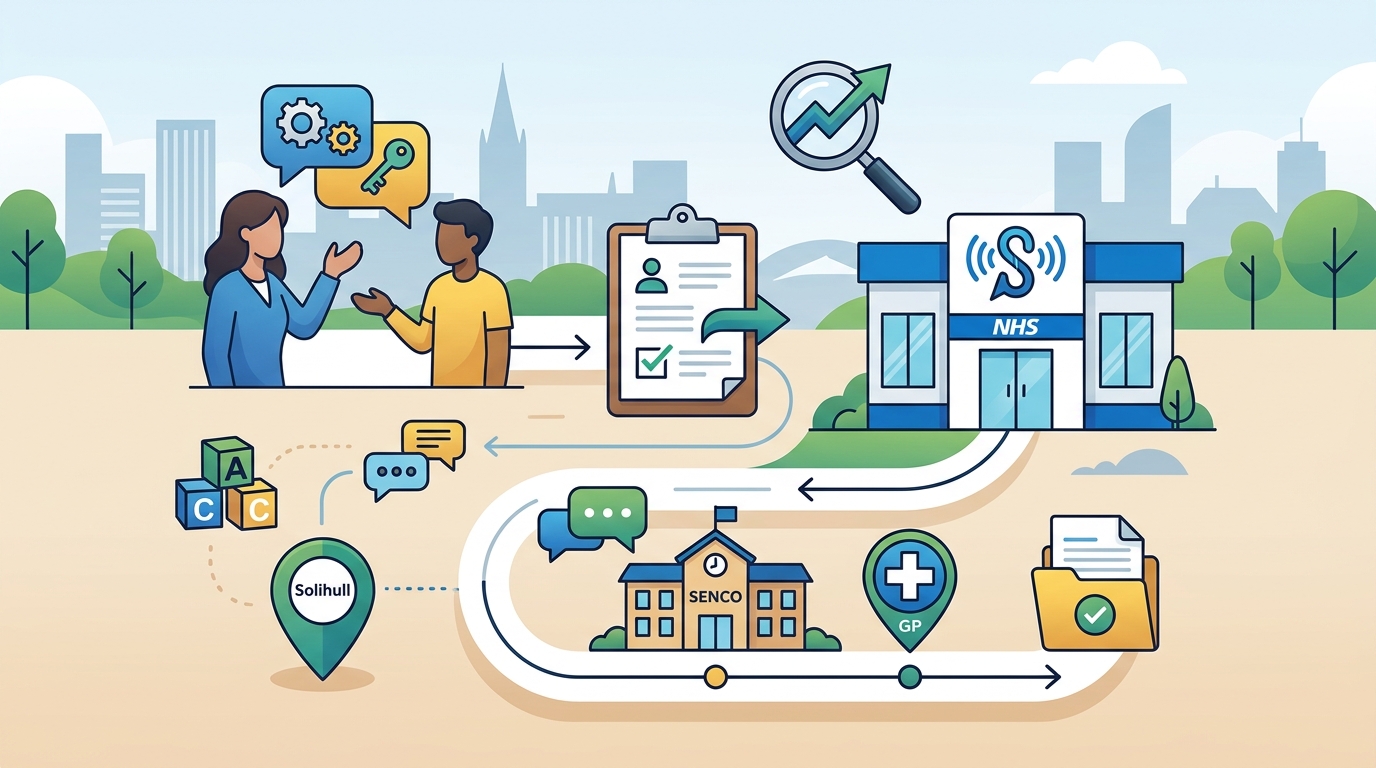
The National Health Service (NHS) is the primary public provider of speech and language therapy in the United Kingdom. In Solihull, the pathway typically involves a referral from a General Practitioner (GP) or a school's Special Educational Needs Coordinator (SENCO). A speech and language therapist is a regulated professional who assesses and treats communication difficulties. Understanding who can refer is the first step in navigating the system.
Parents can request a referral from their GP. You should book an appointment and clearly state your concerns. It is helpful to bring specific examples of how your child struggles to communicate at home. If your child is at school, the SENCO can also initiate a referral. Schools often have direct links with local NHS teams, which can sometimes expedite the process. Knowing these two entry points gives you the most control over the timeline.
What to Prepare Before the Referral
Preparation is key to a successful initial assessment. Before you meet with a GP or SENCO, gather evidence of your child's communication profile. This might include videos of your child speaking, notes on specific words they struggle with, or observations of their social interactions. Concrete examples help the professional understand the severity and nature of the difficulty.
Consider the context of the struggle. Does your child have trouble understanding instructions? Are they unable to form sentences? Do they have a speech sound delay? Writing these down ensures you do not forget important details during a stressful appointment. If you have previously sought help from other providers, bring those reports. This history helps the NHS team avoid duplicating assessments and focus on the current needs.
The Assessment Process in Solihull
Once a referral is accepted, your child will be invited for an assessment. In Solihull, this is often conducted by a local NHS speech and language therapy team. The assessment is a comprehensive look at your child's communication skills. It is not just about speech sounds; it covers language understanding, social communication, and cognitive processing. The therapist will use standardized tests and observational tasks to build a profile.
During this stage, the therapist will also speak with you and your child. They will ask about your child's history, development, and daily life. This collaborative approach ensures the assessment reflects your child's real-world experiences. The outcome of the assessment determines the next steps. If your child meets the criteria for support, a therapy plan will be developed. If not, the team may suggest monitoring or alternative support strategies.
Advocating for Your Child
Waiting lists for NHS services can be long, and this is a common frustration for parents. If you are waiting for an assessment, keep in touch with the team. You can ask for updates on your child's position on the list. If you feel your child's needs are urgent, you can escalate the referral. This involves contacting the GP or SENCO again to highlight the severity of the situation.
Advocacy does not mean being aggressive; it means being persistent and informed. Know your rights under the Equality Act 2010, which protects children with disabilities. If you are unsure about the NHS pathway or if waiting times are impacting your child's education, consider seeking private support in the interim. At Learning DNA, we offer specialist assessments and therapy that can run alongside NHS referrals. Our team can provide a detailed report that you can share with the NHS to support your case. You can book a free consultation to discuss your options.
Supporting Communication at Home
While you wait for NHS services, you can support your child's communication at home. Simple strategies can make a big difference. Use visual supports, such as pictures or gestures, to help your child understand and express themselves. Reduce background noise when talking to your child. Give them time to respond. These small changes can reduce frustration and build confidence.
Engage in play-based communication. Follow your child's lead and model language for what they are doing. If they are stacking blocks, say, "Big block. Small block." This naturalistic approach helps children learn language in a meaningful context. If you need more structured guidance, our speech and language therapy services provide tailored programs for children. We work with families to build skills that transfer to home and school settings.
Key Takeaways
- Referrals can be made by a GP or a school SENCO.
- Prepare specific examples and evidence of communication difficulties before your appointment.
- The NHS assessment is comprehensive and covers speech, language, and social communication.
- Waiting lists can be long; persistent advocacy is essential.
- Simple home strategies can help your child communicate while waiting for services.
Frequently Asked Questions
Who can refer my child for NHS speech and language therapy?
Your GP or your child's school SENCO can refer them. You can request a referral from your GP by booking an appointment and discussing your concerns.
How long does the NHS assessment take?
Waiting times vary. In some areas, it can take several months. The assessment itself usually takes one to two sessions, depending on the complexity of the case.
Can I get a private assessment while waiting for the NHS?
Yes. Many parents choose private assessments to get a faster diagnosis and support. This can also help you advocate for your child with the NHS.
What if my child is not accepted for NHS therapy?
If your child is not accepted, you can ask for a review. You can also seek private therapy or support from your school. The school can provide support under the SEND Code of Practice.
How can I support my child at home?
Use visual supports, reduce noise, and give your child time to respond. Engage in play-based communication and model language for what they are doing.