
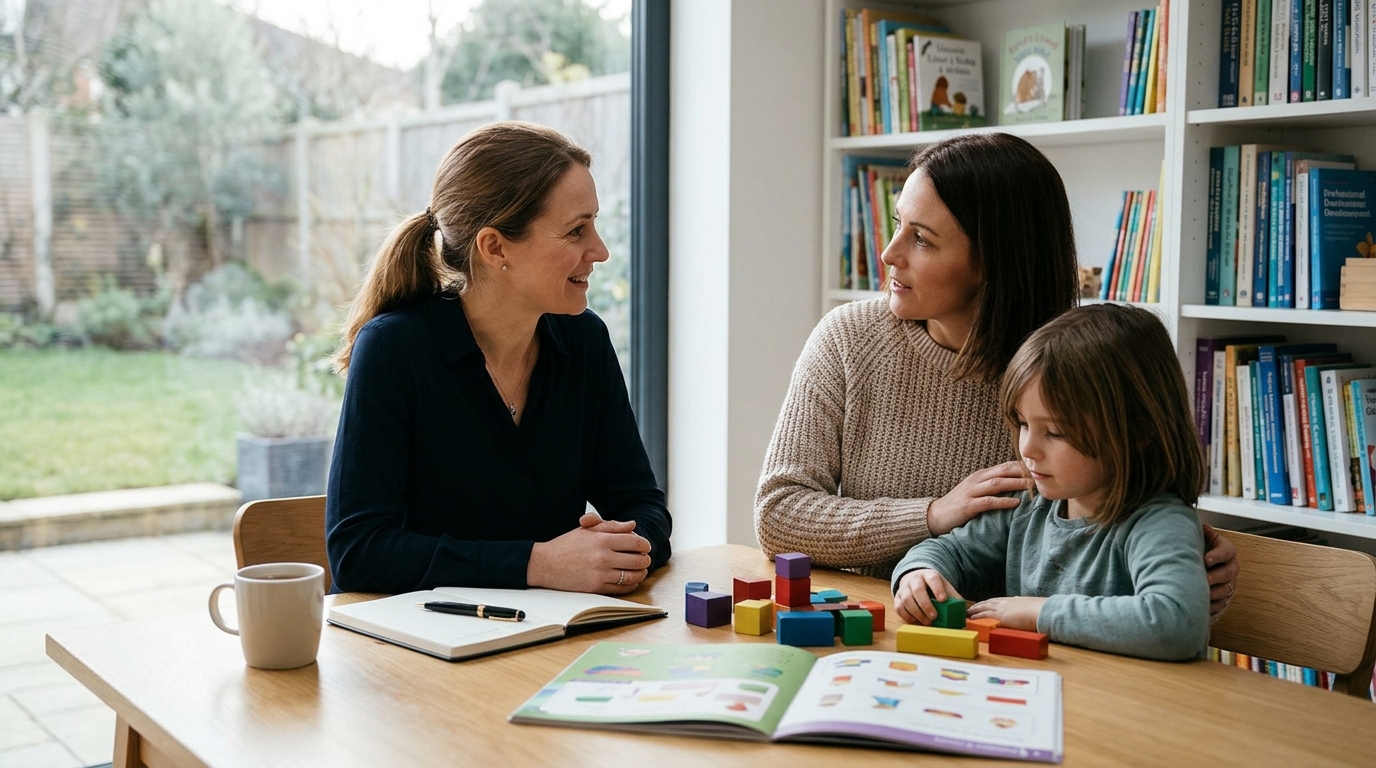
1. Initial Consultation and Concerns Review
Start with a calm, no-pressure conversation to clarify your concerns. The first step is usually a brief consultation where you can discuss what you have noticed about your child or pupil. This is not a diagnostic session, but a chance to ask questions and understand if specialist support is the right next step. At Learning DNA, this often begins with a free 20-minute call with one of our specialists.
2. Gathering Background Information
Collecting detailed history helps paint a complete picture of development. Before the main assessment, you will likely be asked to complete questionnaires or provide information about developmental milestones, school reports, and family history. This data is crucial for understanding patterns over time. It helps the clinician see how difficulties have evolved and what has been tried previously.
3. The 360-Degree Assessment
A comprehensive evaluation looks at the whole child, not just one area. This is the core of the process, where a specialist conducts a detailed assessment of cognitive, social, and emotional functioning. At Learning DNA, our 360-degree assessment takes about 90 minutes and covers 14 areas of learning. It can be done in person or online, depending on what works best for your family.
4. Diagnostic Testing and Observation
Standardized tests and direct observation provide objective data. During this stage, the clinician may use validated tools to measure specific skills and behaviors. They will also observe how the child interacts, communicates, and responds to different tasks. This combination of testing and observation helps confirm or rule out conditions like ADHD, autism, or dyslexia.
5. Report Writing and Analysis
Clear, actionable reports translate data into a practical plan. After the assessment, the clinician analyzes all the information gathered to form a diagnosis or profile. The report should explain what was found in plain language, highlighting strengths as well as areas for development. At Learning DNA, we ensure reports are written for both parents and teachers, making them useful for support plans and EHCP applications.
6. Feedback Session and Discussion
A dedicated session to discuss results ensures you understand the findings. This is where the clinician walks you through the report, answers your questions, and explains what the diagnosis means in practice. It is a chance to ask about next steps and how to support your child at home and school. This conversation is vital for building confidence and clarity after the assessment.
7. Developing a Support Plan
Turning assessment results into a tailored intervention strategy. The final stage involves creating a plan that addresses the specific needs identified in the assessment. This might include therapy, educational adjustments, or exam access arrangements. At Learning DNA, we work with you to design a bespoke program that fits your child’s unique profile and goals.
Choosing the Right Path
When deciding how to proceed, consider whether you need a full diagnostic assessment or a broader learning profile. If you are unsure, starting with a 360-degree assessment is often the best approach, as it provides a complete view of strengths and areas for development. This saves time and ensures you get the right support from the start.
Frequently Asked Questions
How long does a neurodiversity assessment take?
The core assessment session typically takes about 90 minutes, but the entire process, including preparation and feedback, can take several weeks depending on the provider and complexity of the case.
Can assessments be done online?
Yes, many assessments, including those at Learning DNA, can be conducted fully online. This is often convenient for families who prefer to stay at home or for schools looking to minimize disruption to the school day.
What is the difference between a 360-degree assessment and a diagnostic assessment?
A 360-degree assessment provides a broad overview of a child’s learning profile, strengths, and areas for development. A diagnostic assessment is more focused and aims to confirm or rule out a specific condition like ADHD or autism.
Do I need a referral from my GP or school?
It depends on the provider. Private clinics like Learning DNA allow you to book directly without a referral, while some public services may require a referral from a GP or school SENCo.
What happens after I receive the assessment report?
You will typically have a feedback session to discuss the results. From there, you can work with the clinician to develop a support plan, which may include therapy, educational adjustments, or further specialist input.