

How to Choose a Provider
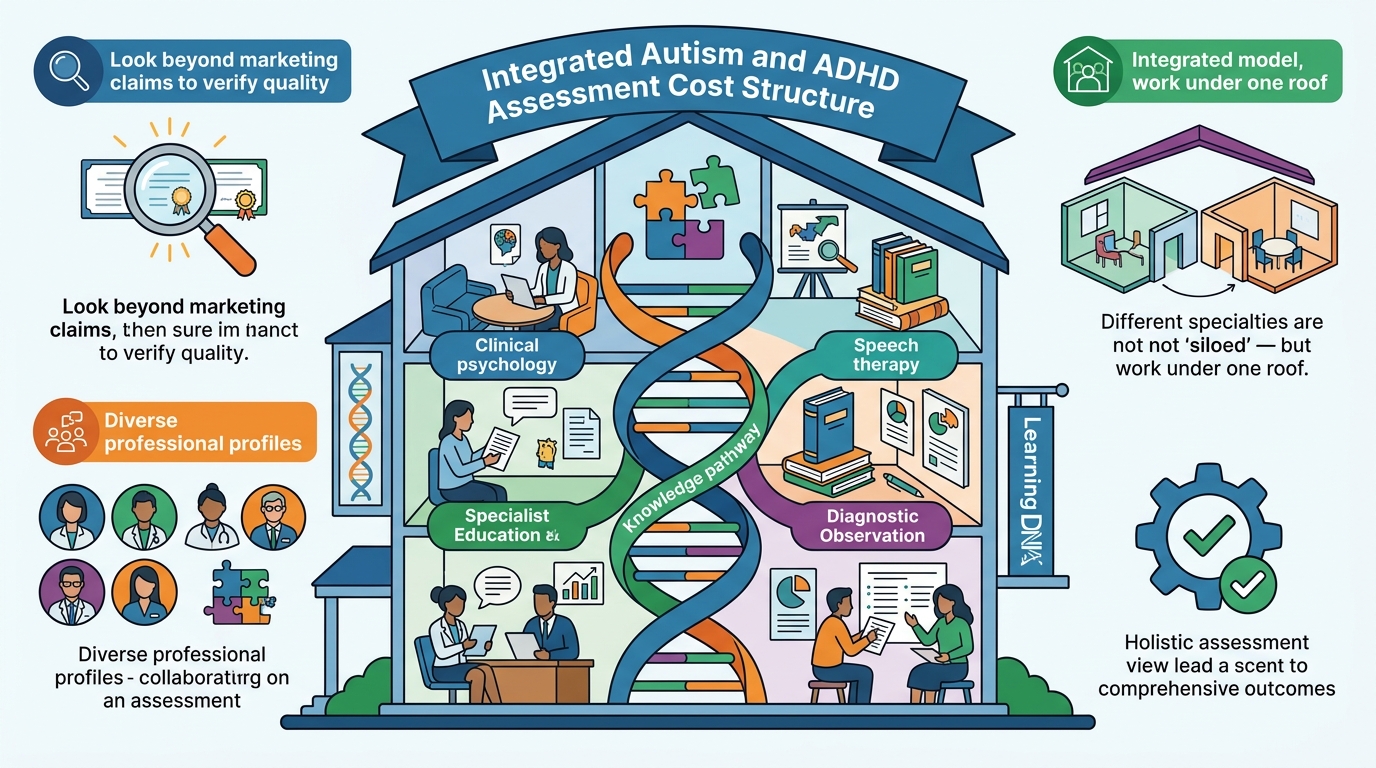
Selecting the right clinic requires looking beyond marketing claims. A reputable neurodiversity clinic should offer a multidisciplinary approach. Learning DNA operates as a multidisciplinary digital neurodiversity clinic, bringing together clinical psychologists and specialist teachers under one roof. This integrated model ensures that assessments are not siloed but viewed holistically. When evaluating options, look for teams that include both clinical and educational expertise.
Integrated vs. Siloed Services
Many families struggle because they must coordinate between separate providers for psychology, speech therapy, and educational support. An integrated clinic reduces this friction. At Learning DNA, the process is designed so that one team manages the entire journey. This continuity of care is a critical differentiator when comparing local options in Solihull.
What to Ask Before Committing
Before booking, you need clarity on the scope of the assessment. Ask specifically about the number of areas covered. A comprehensive assessment should look at more than just behavior. It should include cognitive profiling, sensory processing, and executive function. Ask if the provider offers a 360-degree view of the child's learning profile. This ensures you are not just buying a label, but a roadmap for support.
Scope of the Report
Inquire about the deliverables. Will you receive a detailed report? How long does it take to receive it? Does the report include actionable next steps for school and home? At Learning DNA, the 360-degree assessment is designed to give parents and schools a clear, data-backed plan. This transparency is essential for making an informed financial decision.
How to Verify Credentials
Credentials matter more than titles. In the UK, specific qualifications are required for certain assessments. For dyslexia, you need a Level 5 or Level 7 assessor. For clinical psychology, the practitioner must be registered with the Health and Care Professions Council (HCPC). Always ask for registration numbers. You can verify these on the HCPC website. This step protects you from unqualified practitioners who may offer cheaper but less valid assessments.
Regulatory Bodies
Check if the clinic works with HCPC psychologists and L5-7 Dyslexia Assessors. Learning DNA highlights its team of HCPC psychologists and specialist teachers. Verifying these credentials ensures that the assessment will be recognized by schools, universities, and employers. It also ensures that the diagnostic process follows evidence-based standards.
The Assessment Process
Understanding the timeline helps you budget for time as well as money. A typical comprehensive assessment involves multiple stages. It starts with an initial consultation, followed by the main assessment session, and ends with a feedback meeting. The main assessment often takes around 90 minutes to several hours, depending on the complexity. The entire process, from booking to report, can take several weeks.
Step-by-Step Workflow
Most clinics follow a similar path. First, a free or low-cost consultation to determine fit. Second, the diagnostic assessment. Third, the report writing. Finally, a feedback session to explain the results. At Learning DNA, the process is streamlined to save time and money. This efficiency is a key factor in the overall value proposition.
Cost Breakdown and Drivers
The price of an assessment is driven by several factors. The primary driver is the complexity of the case. A straightforward ADHD assessment costs less than a combined autism and ADHD assessment. The second driver is the level of the practitioner. A clinical psychologist typically charges more than a specialist teacher. The third driver is the scope of the report. A detailed 360-degree report costs more than a basic diagnostic letter.
Price Ranges in 2026
Common Mistakes to Avoid
Families often make costly errors when navigating this process. The most common mistake is choosing the cheapest option without verifying credentials. This can lead to a report that schools or universities do not accept. Another mistake is not preparing for the assessment. If the child is not ready, the assessment may need to be repeated, doubling the cost. Finally, failing to ask about the report format can lead to a document that is not useful for your specific needs.
Hidden Costs
Look out for additional fees for travel, rescheduling, or extra sessions. Some clinics charge for the initial consultation, while others offer it for free. At Learning DNA, the initial consultation is free, which removes a barrier to entry. This transparency helps families budget accurately from the start.
Private vs. NHS Options
Comparing Timelines
NHS assessments are free but slow. Private assessments are costly but fast. The decision depends on your family's circumstances. If your child is struggling significantly in school, the delay of an NHS wait may not be acceptable. Private assessment allows you to act now. It also provides a report that can be used to apply for an Education, Health and Care Plan (EHCP) if needed.
Costs for Specific Cases
Costs vary by the specific combination of conditions. A child with suspected ADHD only will pay less than a child with suspected autism and ADHD. A child with additional sensory processing difficulties may require a more extensive assessment. This increases the time and cost. It is important to discuss these specifics during the initial consultation. This ensures that the quote you receive is accurate for your child's unique profile.
Combined Assessments
Combined assessments are often more cost-effective than separate assessments. Instead of paying for two full assessments, you pay for one integrated process. This is particularly relevant for children with co-occurring conditions. At Learning DNA, the 360-degree approach is designed to handle these complexities efficiently. This holistic view ensures that all aspects of the child's profile are addressed in one go.
Regulatory Protections
Private clinics are subject to consumer protection laws. You have the right to a clear contract and a refund if services are not provided as described. You also have the right to data protection. Your child's data must be handled securely. Look for clinics that are ISO 27001 certified for data security. This certification ensures that your sensitive information is protected. It is a mark of a professional and trustworthy provider.
Data Security
Assessment data is highly sensitive. It includes cognitive profiles, behavioral observations, and diagnostic results. This data must be stored securely. Learning DNA is ISO 27001 certified, which means it meets strict standards for information security. This is a critical factor when choosing a provider, especially for digital or remote assessments.
Solihull and Birmingham Specifics
Local Providers
In Solihull, Learning DNA is located in The Courtyard, 707 Warwick Road. This central location makes it accessible for families from across the West Midlands. The clinic offers both in-person and remote options, which is convenient for families who live further afield. The local presence of such a specialist clinic is a significant advantage for families in the area.
Timing and Scheduling
Timing is a critical factor in the assessment process. Booking early in the term is often better than waiting until the end. This allows time for the assessment, the report, and the implementation of support. If you wait until the end of the term, the support may not be in place for the next year. Additionally, some clinics have limited availability. Booking early ensures that you get a slot that works for your family. It also allows time for any necessary preparation.
Seasonal Demand
Demand for assessments peaks at the start of the academic year. This is when parents are most concerned about their child's progress. It is also when schools are most likely to refer. If you can, book your assessment before the start of the term. This avoids the peak demand and ensures a faster turnaround. It also gives you time to discuss the results with your child's school before the new term begins.
Long-Term Outcomes
Measuring Progress
Progress should be tracked over time. This can be done through regular reviews and updates to the support plan. At Learning DNA, the focus is on individualized approaches that are tailored to the child's specific needs. This ensures that the support is effective and that progress is measurable. The goal is not just a diagnosis, but a positive change in the child's life.
Key Takeaways
- Always verify practitioner credentials with the HCPC and check for Level 5 or 7 dyslexia assessor status.
- Integrated clinics like Learning DNA offer a 360-degree view, which is more valuable than siloed assessments.
- The NHS is free but has long waiting lists, often exceeding 12 months.
- Combined assessments are more cost-effective than separate assessments for co-occurring conditions.
- Look for ISO 27001 certification to ensure your data is secure.
- Booking early in the term allows time for support to be implemented before the next year.
- The long-term value of an assessment lies in the support plan that follows, not just the diagnosis.
Frequently Asked Questions
How much does a private autism assessment cost in Solihull?
Is a private assessment recognized by schools?
Yes, a private assessment from a qualified practitioner is recognized by schools. It can be used to apply for an Education, Health and Care Plan (EHCP) or to request additional support. Ensure that the practitioner is registered with the HCPC or holds the relevant qualifications.
How long does the assessment process take?
Can I get a refund if I am not satisfied?
What is the difference between a Level 5 and Level 7 assessor?
A Level 5 assessor is qualified to assess for dyslexia and specific learning difficulties. A Level 7 assessor has additional qualifications and can assess for a wider range of conditions. Both are recognized by schools and universities, but Level 7 assessors may charge more.
Do I need to travel to Solihull for the assessment?
No, many clinics offer remote assessments. This is convenient for families who live further afield. Remote assessments are conducted via video call and are just as effective as in-person assessments. At Learning DNA, you can choose between in-person and remote options.