

Which Clinics Near Birmingham Offer Dyslexia Assessments by a Qualified Specialist?
Parents searching for a dyslexia assessment near Birmingham need a provider whose assessor holds a recognized specialist qualification, not just a general teaching background. Learning DNA operates a multidisciplinary neurodiversity clinic in Solihull, just outside Birmingham, and offers fully remote assessments led by Level 7 qualified specialists. This guide explains the specific qualifications to look for, how to verify an assessor's credentials, and the practical options available to families in the West Midlands.
Dyslexia Assessment Qualifications
Understanding the right qualification is the first step in finding a credible assessment. A dyslexia assessment is a formal evaluation designed to identify specific learning difficulties in reading, writing, and spelling, as well as related cognitive processing issues. Not every teacher or educational psychologist is qualified to conduct this specific type of diagnostic work. The gold standard in the UK is a Level 7 qualification in dyslexia assessment.
The Level 7 Standard
Level 7 dyslexia assessors have completed advanced training that goes beyond standard teaching qualifications. This level of expertise allows the assessor to interpret complex cognitive profiles and provide a definitive diagnosis. When you book an appointment, you should ask directly if the clinician holds a Level 7 qualification. This ensures the report will be recognized by schools, universities, and exam boards for access arrangements.
Why General Teaching Qualifications Are Not Enough
Many schools employ teachers who are trained to identify signs of dyslexia in the classroom. While these professionals are valuable for early intervention, they are not typically qualified to issue a formal diagnostic report. A formal assessment requires standardized testing and clinical interpretation that only a specialist assessor can provide. This distinction is critical if you are seeking exam access or specific educational support plans.
Psychological vs. Specialist Assessment
Some families choose to see a clinical psychologist instead of a specialist dyslexia teacher. Both routes are valid, but they serve different purposes. A psychologist provides a broader cognitive profile, while a Level 7 specialist focuses deeply on the specific mechanics of reading and writing difficulties. At Learning DNA, our team includes both HCPC registered psychologists and Level 7 dyslexia assessors, allowing us to tailor the assessment to your child's specific needs.
Specialist Assessor Credentials
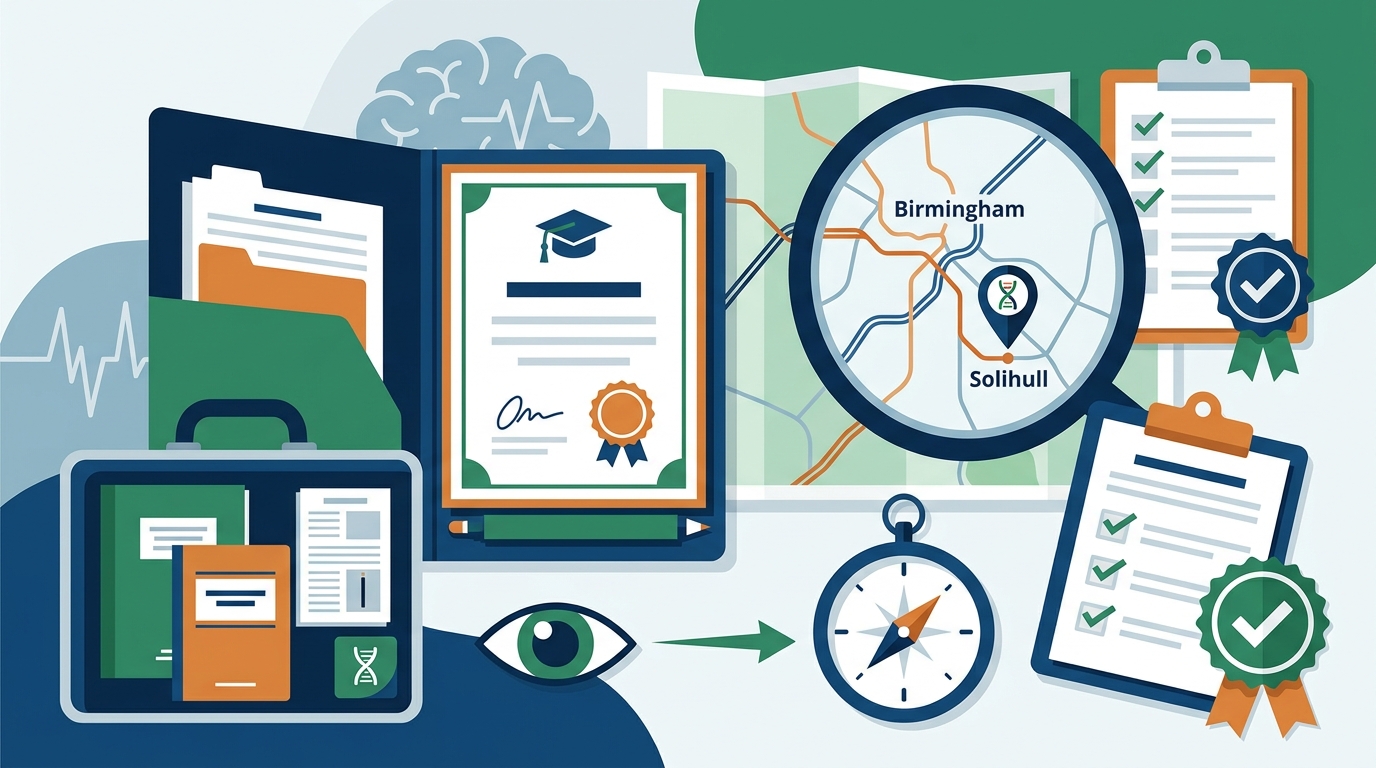
Once you know the qualification level, you need to know how to verify it. Credentials are not just about a certificate on the wall; they are about ongoing professional registration and adherence to ethical standards. A qualified specialist assessor is a professional who has met specific academic and practical requirements and maintains their status through continuing professional development.
Professional Registration Bodies
HCPC Registration for Psychologists
If your child is seeing a psychologist, that professional must be registered with the Health and Care Professions Council (HCPC). This is a legal requirement in the UK. You can verify any psychologist's registration on the HCPC online register. This ensures the professional is bound by a code of conduct and has the necessary training to practice safely. Learning DNA works exclusively with HCPC registered psychologists and Level 5-7 dyslexia assessors to ensure the highest standard of care.
Checking the Assessor's Specific Role
It is also important to know who will actually be conducting the assessment. Some clinics advertise a service but may use a junior staff member for the initial session. You have the right to know the name and qualification of the person who will be sitting with your child. A transparent clinic will provide this information before you book. This level of clarity helps you feel confident that your child is in the hands of a true specialist.
Birmingham Clinic Options
Families in the West Midlands have several options for accessing specialist dyslexia assessments. The choice often comes down to location, wait times, and the specific type of support offered. Birmingham and its surrounding areas, including Solihull, have a growing number of private clinics catering to neurodiverse children.
Private Clinics in the West Midlands
Learning DNA: Solihull and Remote Options
Located in Solihull, just a short drive from Birmingham city center, Learning DNA is the UK's first multidisciplinary neurodiversity clinic. We operate from Unit 8, The Courtyard, 707 Warwick Road, Solihull. However, we also offer fully remote assessments, which means you do not need to travel at all. This is a significant benefit for families who find travel stressful or who live further afield. Our remote services are delivered by the same qualified specialists who see clients in person.
NHS and Local Authority Routes
It is worth noting that the NHS and local authorities also provide assessment services. However, these routes often involve long waiting lists, sometimes measured in months or even years. If your child is in crisis or if you need a diagnosis quickly for school or exam purposes, a private clinic is often the more practical choice. You can always use a private assessment to support an application for an Education, Health and Care Plan (EHCP) later on.
Comparison of Assessment Approaches
Choosing the right clinic depends on your specific circumstances. The table below summarizes the key differences between the main options available to families near Birmingham.
| Provider Type | Typical Wait Time | Cost | Assessor Qualification | Best For |
|---|---|---|---|---|
| Learning DNA (Private) | Days to Weeks | Private Fee | Level 7 / HCPC Psychologist | Fast diagnosis, remote or in-person, multidisciplinary needs |
| NHS / Local Authority | Months to Years | Free | Varies (often Educational Psychologist) | Long-term support, EHCP applications |
| University Departments | Varies | Sliding Scale | Postgraduate Supervised | Adults, research-focused assessments |
As noted by Understood, university psychology departments sometimes offer a sliding scale fee for these kinds of assessments, which can be a viable option for adults. For children, however, private clinics like Learning DNA often provide the most streamlined path to a clear diagnosis and immediate support plan.
Key Takeaways
- Always verify that the assessor holds a Level 7 qualification in dyslexia or is an HCPC registered psychologist.
- General teaching qualifications are not sufficient for a formal diagnostic report.
- Private clinics in the West Midlands offer significantly shorter wait times than the NHS.
- Remote assessments are a valid and effective alternative to in-person visits, especially for families with travel difficulties.
- Learning DNA in Solihull offers both in-person and remote services led by specialist assessors.
- A multidisciplinary clinic can address overlapping needs like ADHD and dyslexia in a single pathway.
- Check the specific name and credentials of the assessor who will be seeing your child.
- Use a private assessment to support future applications for school support or exam access.
Frequently Asked Questions
What is the difference between a Level 5 and Level 7 dyslexia assessor?
A Level 5 assessor can identify signs of dyslexia and provide recommendations for support, but they cannot issue a formal diagnostic report. A Level 7 assessor is qualified to provide a full diagnosis and a report that is recognized by schools and exam boards for access arrangements. For a definitive diagnosis, you need a Level 7 assessor.
Can I get a dyslexia assessment online?
Yes. Many private clinics, including Learning DNA, offer fully remote assessments. These are conducted via video call and use the same standardized tools as in-person assessments. Remote assessments are particularly useful for families who find travel stressful or who live outside the immediate Birmingham area.
How long does a dyslexia assessment take?
A standard dyslexia assessment typically takes between 2 and 3 hours. Some clinics, like Learning DNA, offer a 360-degree assessment that covers multiple areas of learning in a 90-minute session, which can be more efficient for families. The report is usually provided within a few weeks of the assessment.
Is a private assessment recognized by schools?
Yes, provided the assessor holds the correct Level 7 qualification. Schools are required to consider evidence of specific learning difficulties when making decisions about support and exam access. A report from a qualified specialist is a strong piece of evidence for these discussions.
What should I ask a clinic before booking?
Ask who will be conducting the assessment and what their specific qualifications are. Ask about the format of the assessment (in-person or remote) and how long the report will take. Also ask about the cost and whether payment plans are available. A transparent clinic will answer these questions clearly.
Can a dyslexia assessment also diagnose ADHD?
Not always. A dyslexia assessment focuses on reading and writing difficulties. However, many children with dyslexia also have ADHD. A multidisciplinary clinic can assess for both conditions in a single pathway, which is more efficient and less stressful for the child. Learning DNA offers joint assessments for ADHD and dyslexia.
Where is Learning DNA located?
Learning DNA is located in Solihull, at Unit 8, The Courtyard, 707 Warwick Road. This is just outside Birmingham city center. We also offer remote services, so you do not need to travel if you prefer to be assessed from home.
Next Steps for Your Family
Choosing the right clinic for a dyslexia assessment is a significant decision, but it does not have to be overwhelming. By focusing on the assessor's qualifications and the clinic's transparency, you can find a provider that will give your child the clear diagnosis and support they need. If you are in the Birmingham or Solihull area, or if you prefer a remote service, Learning DNA offers a free 20-minute consultation to discuss your concerns. This is a no-pressure way to see if we are the right fit for your family. You can also explore our blog for more advice on supporting neurodiverse children at home and at school.